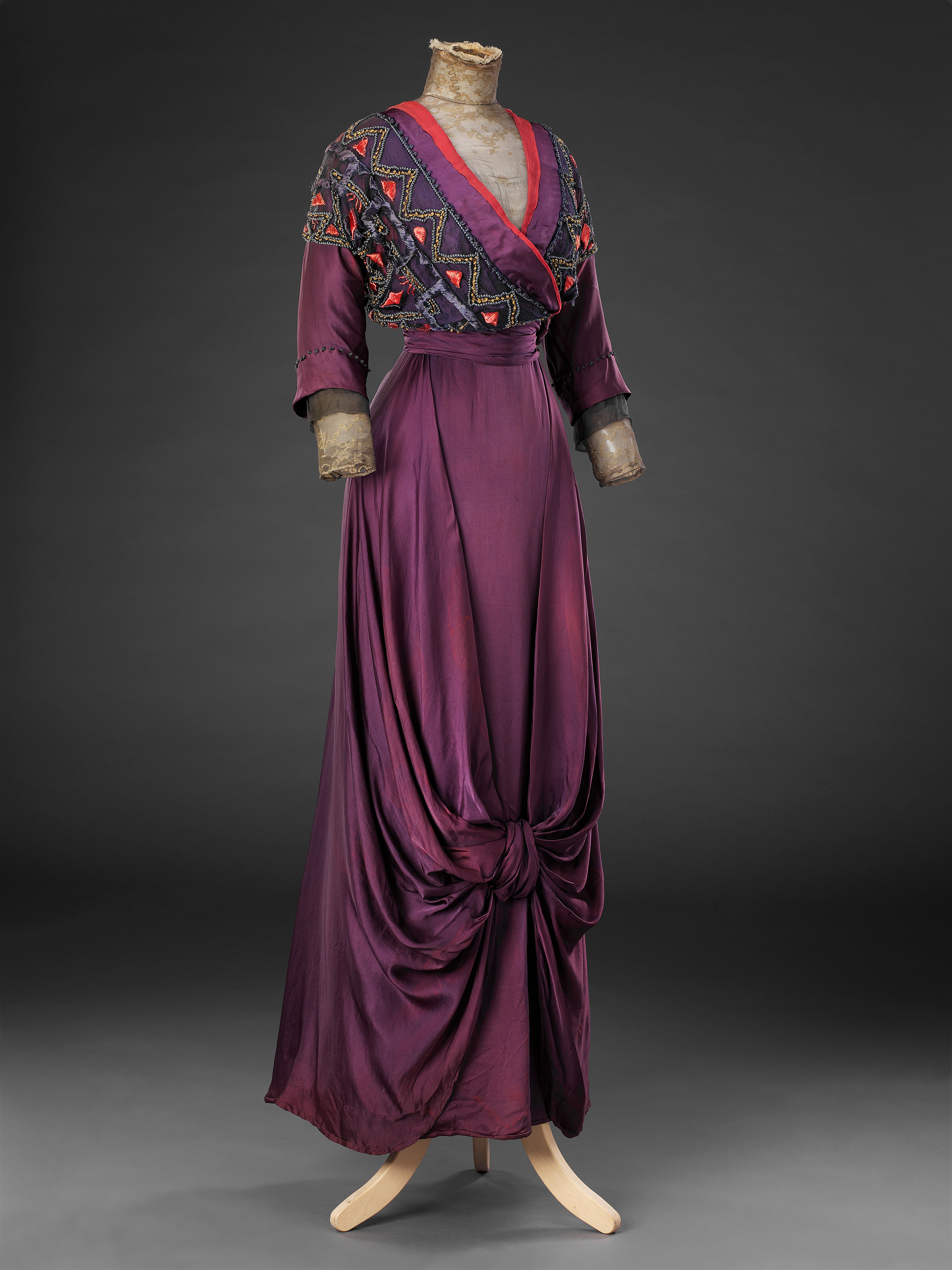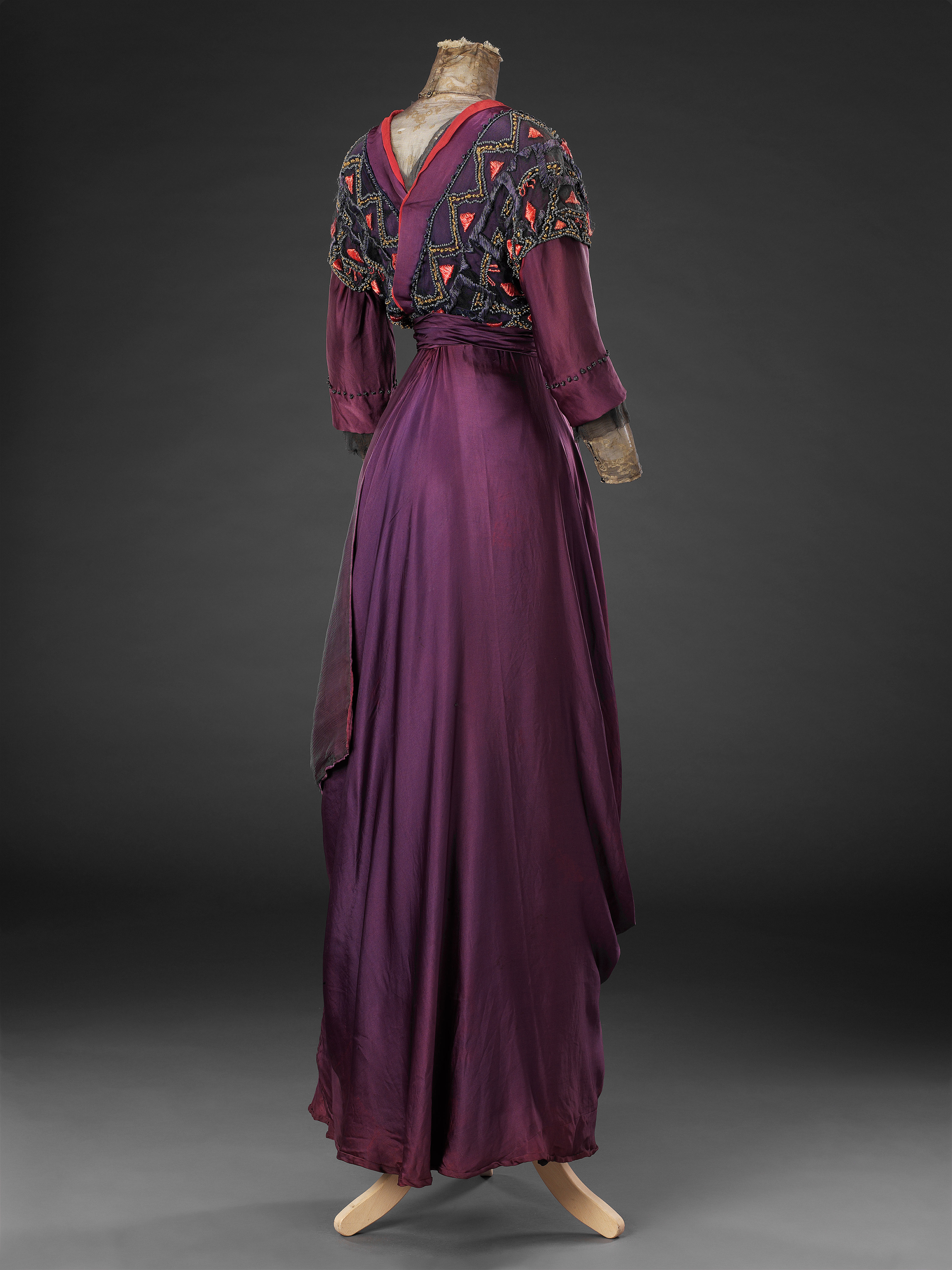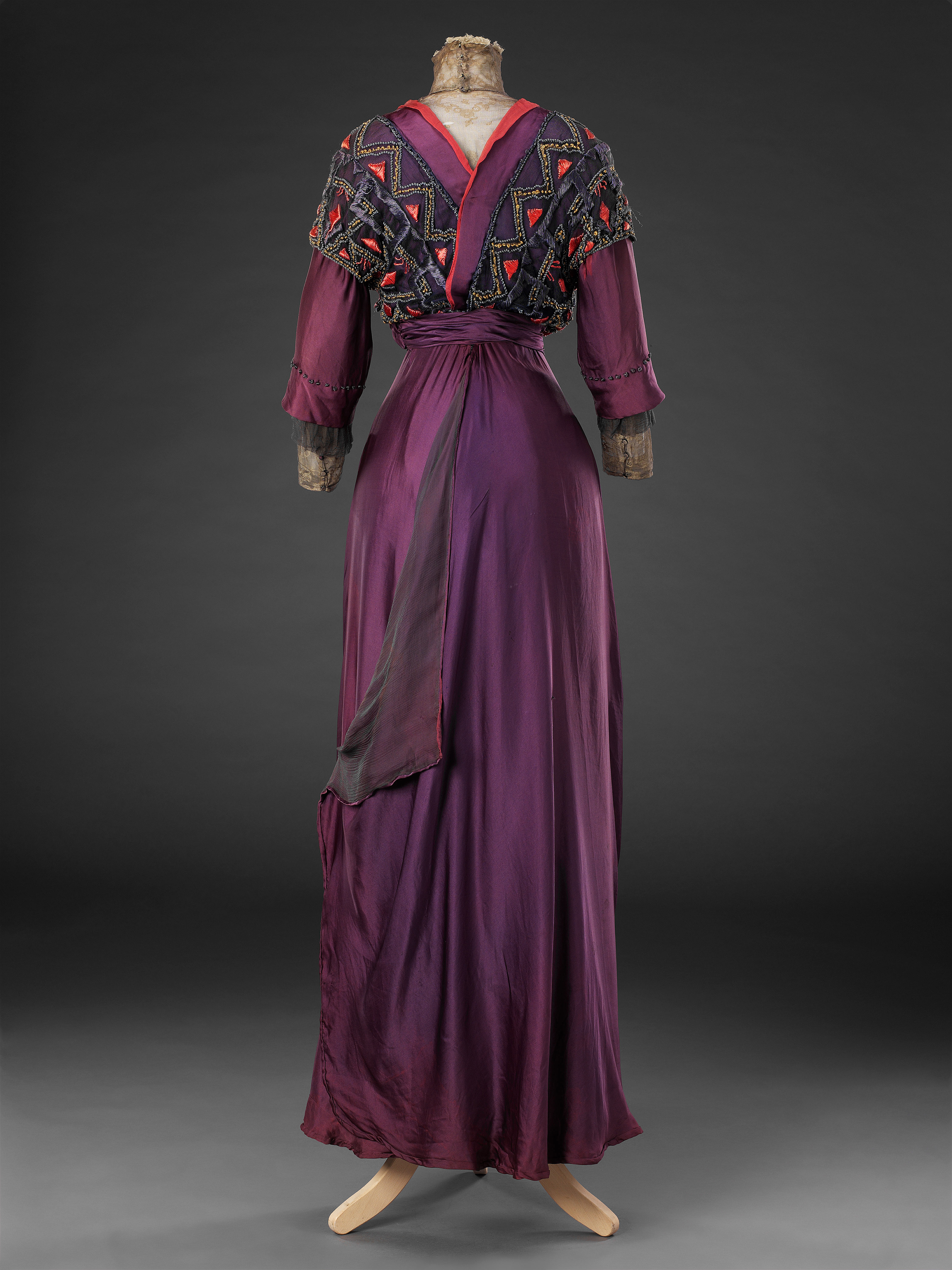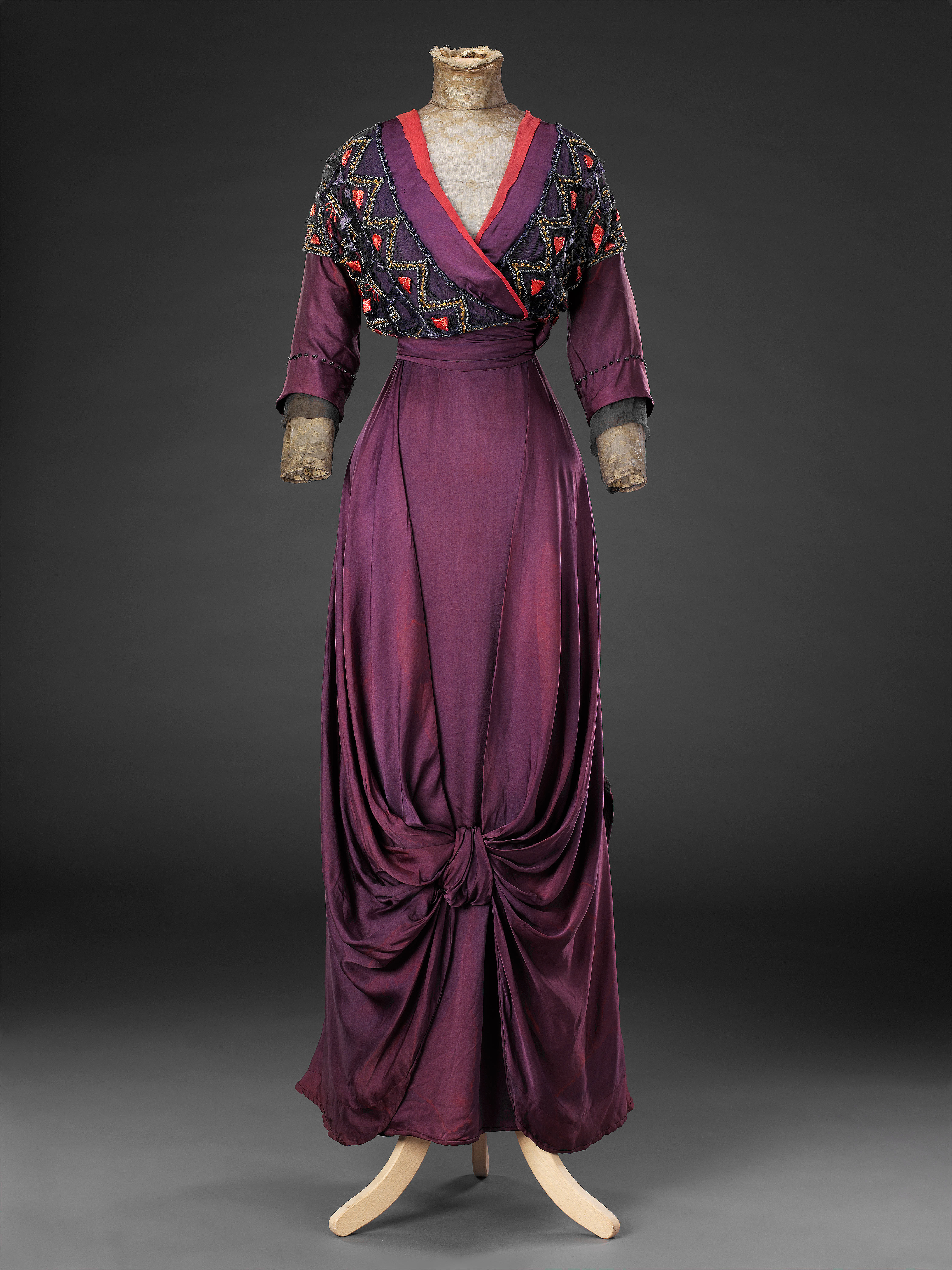
Opened by the Canadian actress Grace Pinder in 1906 after two years on the London stage, the label ‘Armide’s name reflects the theatrical background and artistic intentions of its glamorous founder. The Syrian femme fatale sorceress Armide from the time of the crusades had inspired several operas and plays since its first appearance in Torquato Tasso’s epic poem Gerusalemme Liberata in 1581. It should also be the title role of the Ballets Russes production Pavillon d’Armide a year after the founding of Grace Pinder’s business.
The vivid colours of this dress reflect the artistic influences that had become de rigueur by the early 1910s, a time of bold effects in the arts that influenced the couturier Paul Poiret’s orientalism, and the eastern-themed productions of the Ballets Russes. Contemporary artistic movements such as the Fauves used strong, non-naturalistic colours to evoke an emotional response in the viewer. A description of a different Armide dress in Northern Whig of 15th January 1910 illustrates how the dressmaker’s sense of colour was perceived: ‘in the lovely new shade of cerulean-blue soft satin, a colour which is very different to the rather crude blue which our grandmothers designated “sky”, and which was more suggestive of a German oleograph than “heaven” on a summer’s day.’ The bodice’s loosely executed geometric motifs, worked in silk thread and decorative cord on black tulle, recall those of Ballets Russes costumes. The untrimmed skirt is draped into a central knot just below knee level, another orientally-inspired feature laid claim to by Paul Poiret.
Born in British Columbia in 1884, the daughter of a wealthy railway engineer moved to London in 1904, where she and her sister Marjorie started their brief but successful acting careers. A page-filling photograph of the sisters in the Tatler is captioned with the announcement of her opening Armide. In the following years, the business is mentioned repeatedly in the American Register as a London shopping recommendation. In 1911, Grace married Captain Horace Webber, and it seems that their purchase of Windley Hall, Derby and the birth of their daughter in 1914 were contributing factors to the closing of her business. In 1913, it is still listed in the Post office directory as ‘Armide Madame & Co, court dressmakers’, but during the First World War when Grace briefly returned to the stage to entertain British troops and support charities, there are no further known references to it. Her obituary in the 1932 Marylebone Mercury portrays her merely as Mrs. Horace Webber, with no mention of her maiden name, acting or fashion career.
The National portrait gallery holds several Bassano portraits of Grace as an actress and a Singer Sargent drawing in the Harvard collection that shows her in 1911, around the time when she would have designed our dress.