Dress
1881-2
Silk trimmed with lace
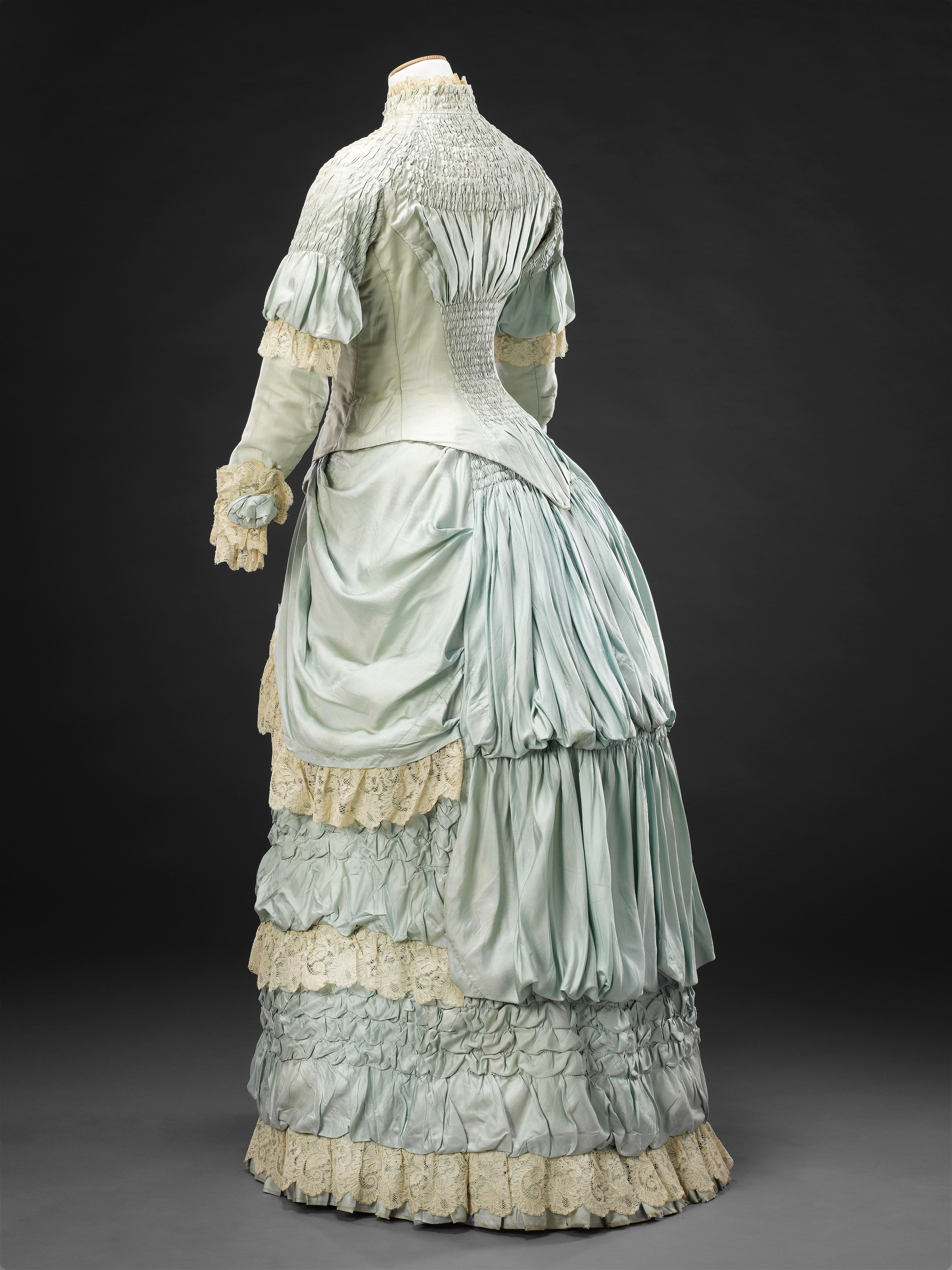
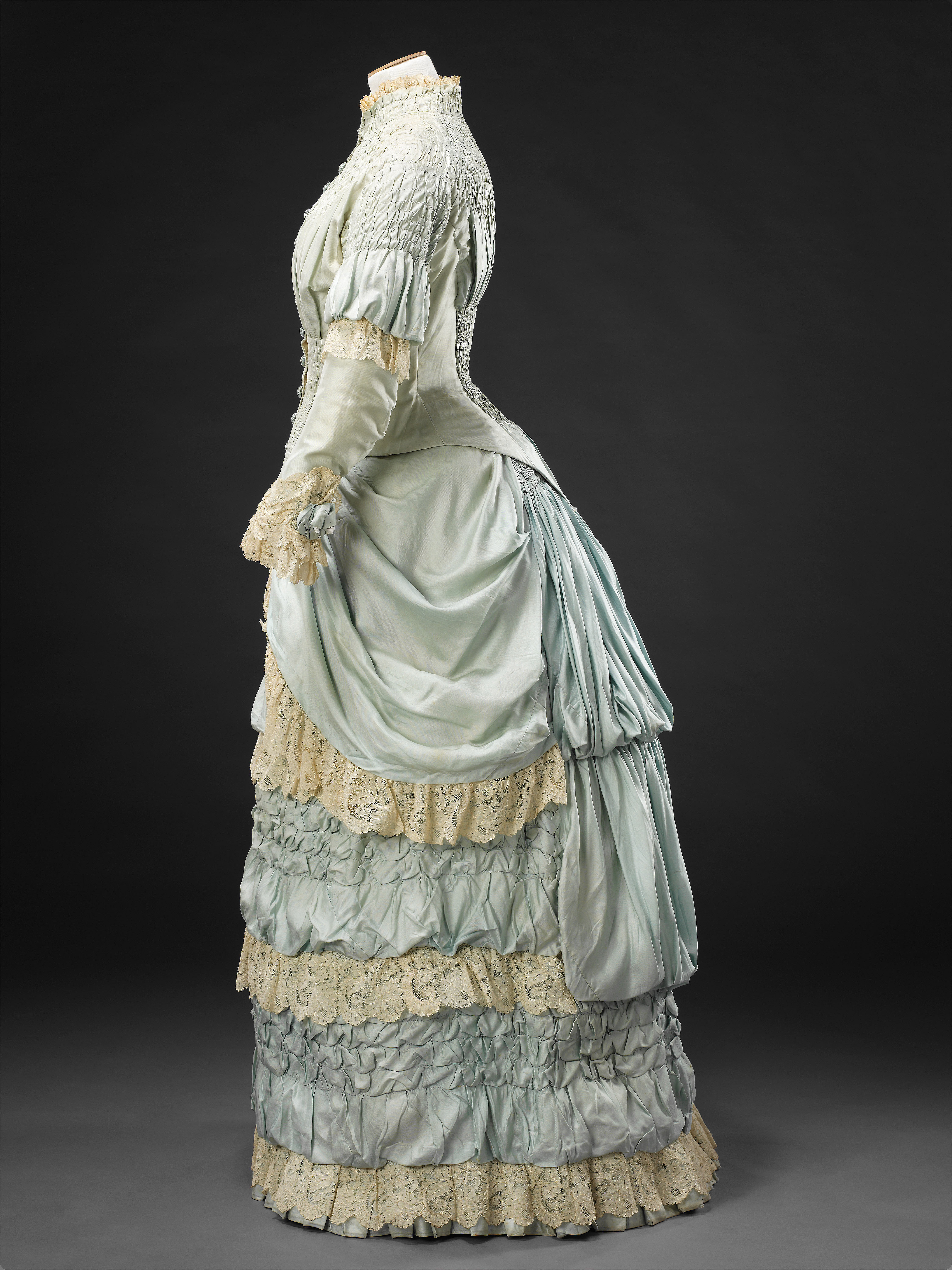
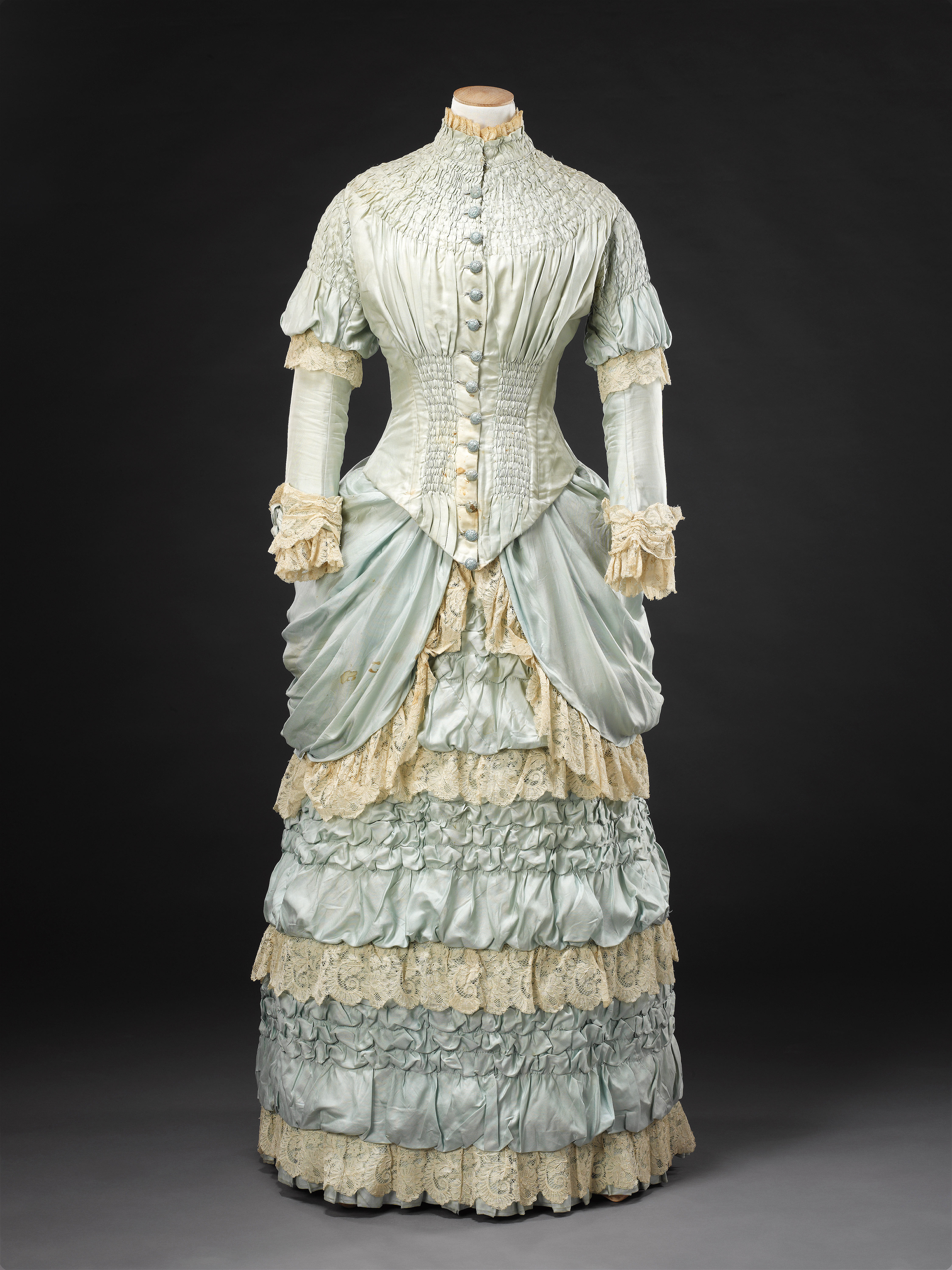
This elaborately ruched silk dress from the very early 1880s repeatedly inspired the costume designer Anthony Powell. He used it as reference for Nastassja Kinski’s wedding dress in the 1979 adaptation of Tess and for a costume worn by Renée Zellweger in the 2006 film Miss Potter. Both costumes almost reproduce the dress, but both versions respond to the demands of the role, significance in the plot and the physical appearance of the actresses. These subtle differences illustrate the costume designer’s role as a creator of character and facilitator of performance, rather than an inventor of ‘fashion designs’. In Tess, the style has been transformed into her wedding dress and is therefore made from white silk. It is worn in the long and crucial scene after her wedding. In the scene, her new husband gives her a necklace and places it into a lower neckline that was presumably added to this version for the purpose. In Miss Potter we only catch a brief glimpse of a version in light green silk in a flashback that shows Miss Potter being introduced to several mismatched suitors.
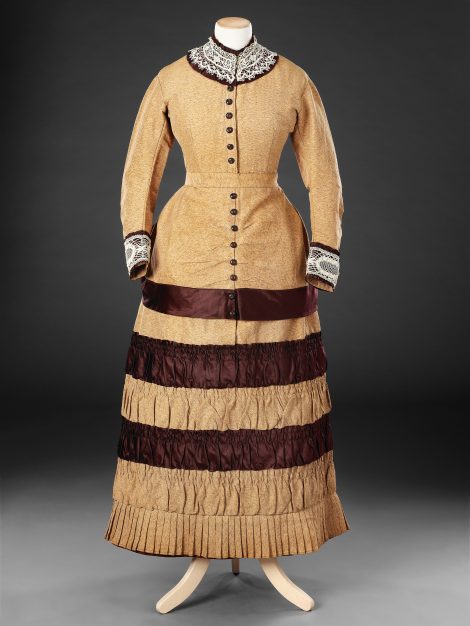
The original two-piece silk dress would have been owned by a relatively affluent person. A simpler contemporary dress in our collection demonstrates differences and similarities dictated by wealth, class and occasion: The brown dress seen as a Related Item is roughly constructed of stout fabric with inexpensive buttons. Despite its dark contrasting bands and horizontal waistband that hark backwards in style, its slim line, bustle back, areas of ruching and broad neckline are all contemporary features shared with the more up to date blue silk dress, and it probably belonged to a lower middle- or working-class woman who aspired to be fashionable.
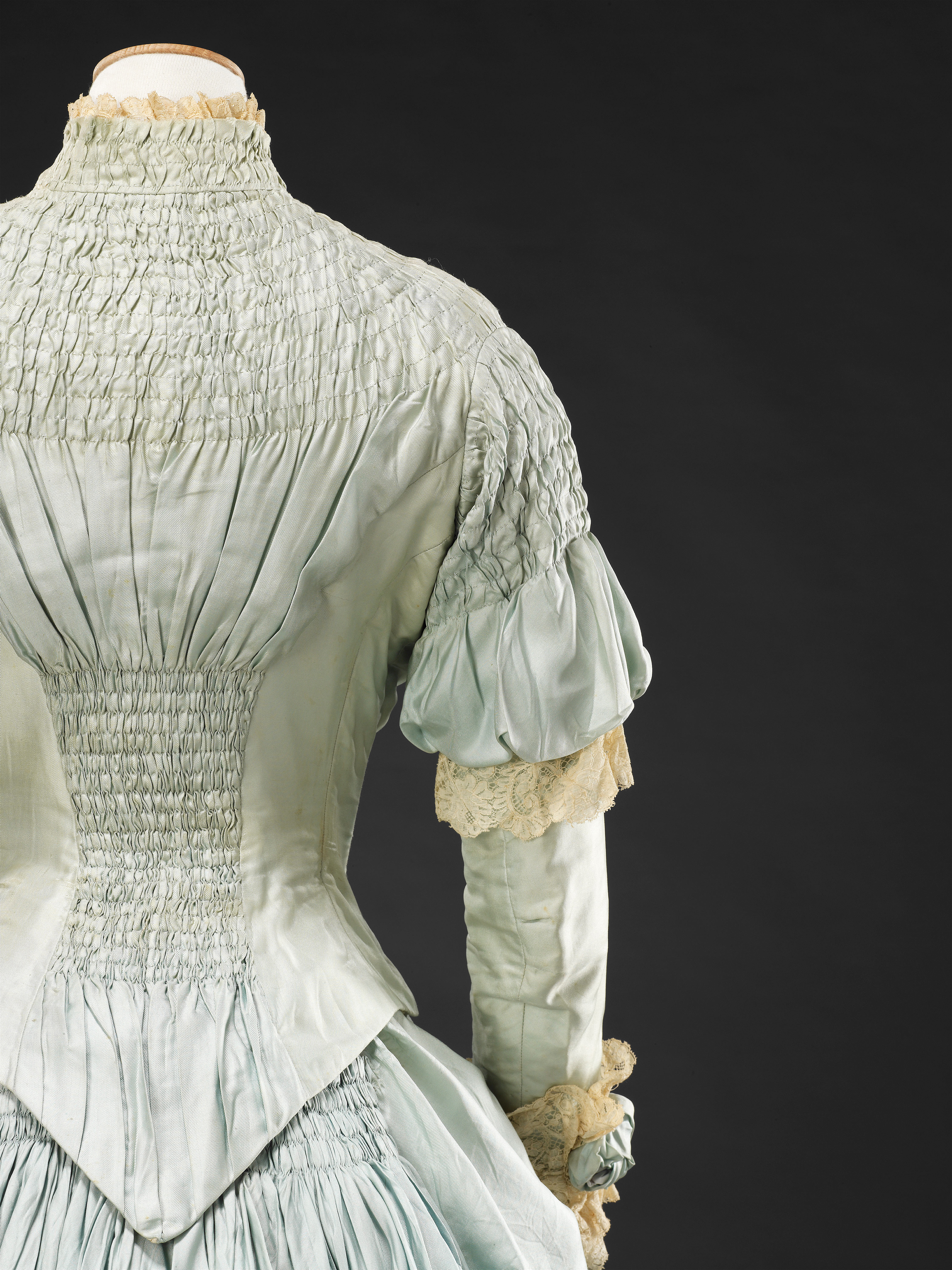
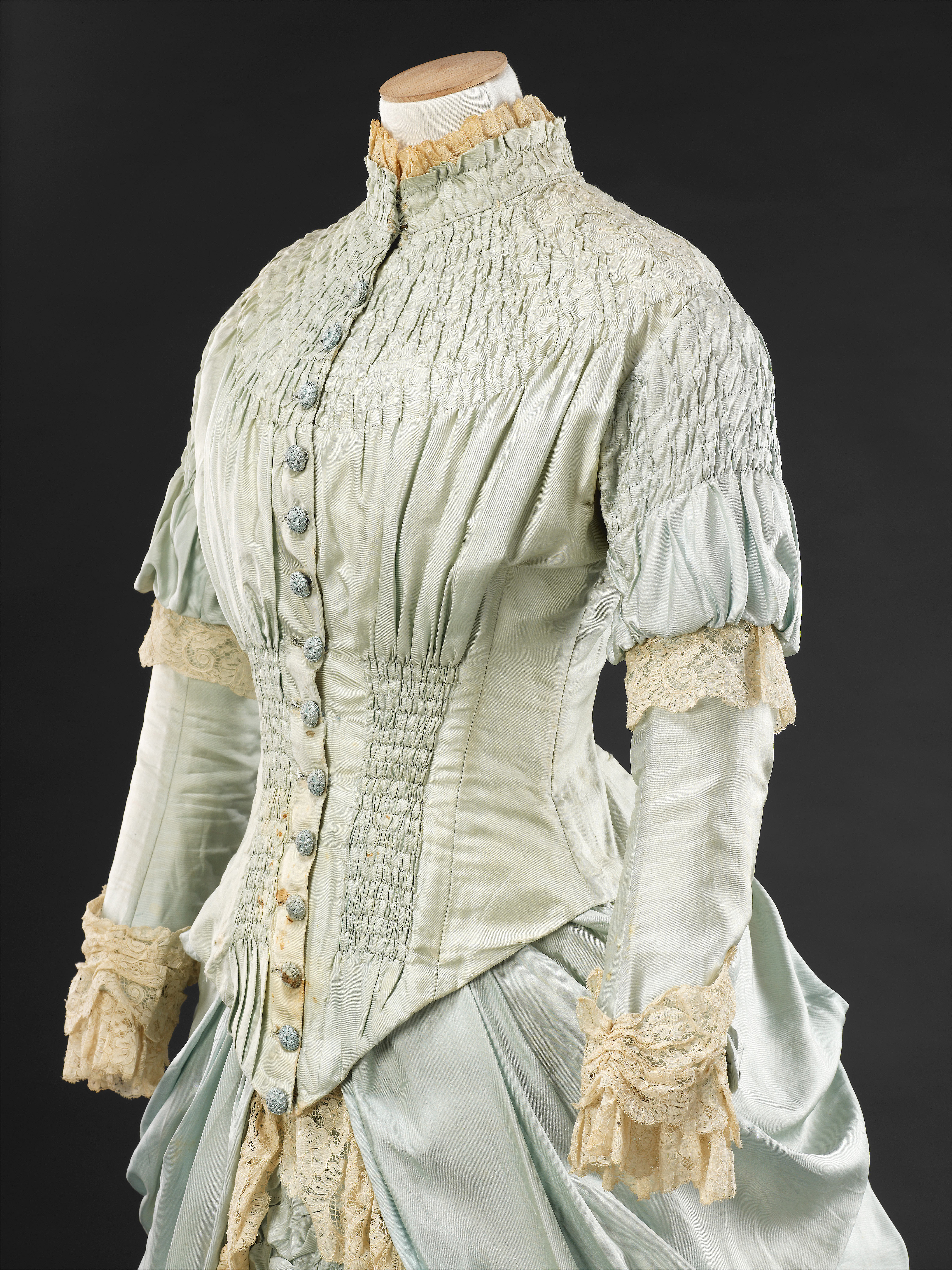
This pale blue silk afternoon dress, clearly involved hours of expensive work in its construction from fine silk twill. Although a stylish contemporary garment, its softly draped fabric of a delicate due, puffed and ruched in imitation of smocking, suggests the influence of artistic dress. By the early 1880s middle- and upper-class women with cultural interests would have been aware of the impact of the Arts and Crafts and Aesthetic movements on the fine and decorative arts. The espousal of an idealised rural past and the exotic Far East was a reaction against the industrialisation of Western Society, and their influence can be seen, for example, in the book illustrations of Kate Greenaway (see an example here). Dedicated followers of these movements became ridiculed in the pages of the magazine Punch and on stage in Gilbert and Sullivan’s light opera Patience of 1881. In the same year, William Powell Frith’s painting Private View at the Royal Academy depicted eminent figures at the Academy’s summer exhibition. A number of women wearing artistic dress are represented by Frith as subject to ephemeral fads, but even those more conventionally dressed appear to have borrowed elements of a picturesque style, ruched and draped, while remaining fashionably corseted, much in the way of the original owner of our dress has done.