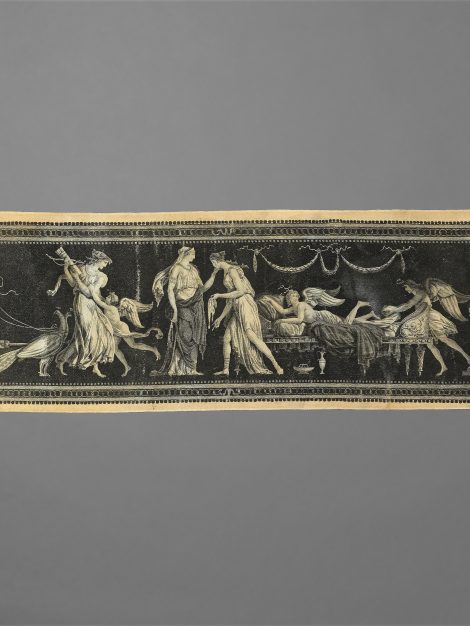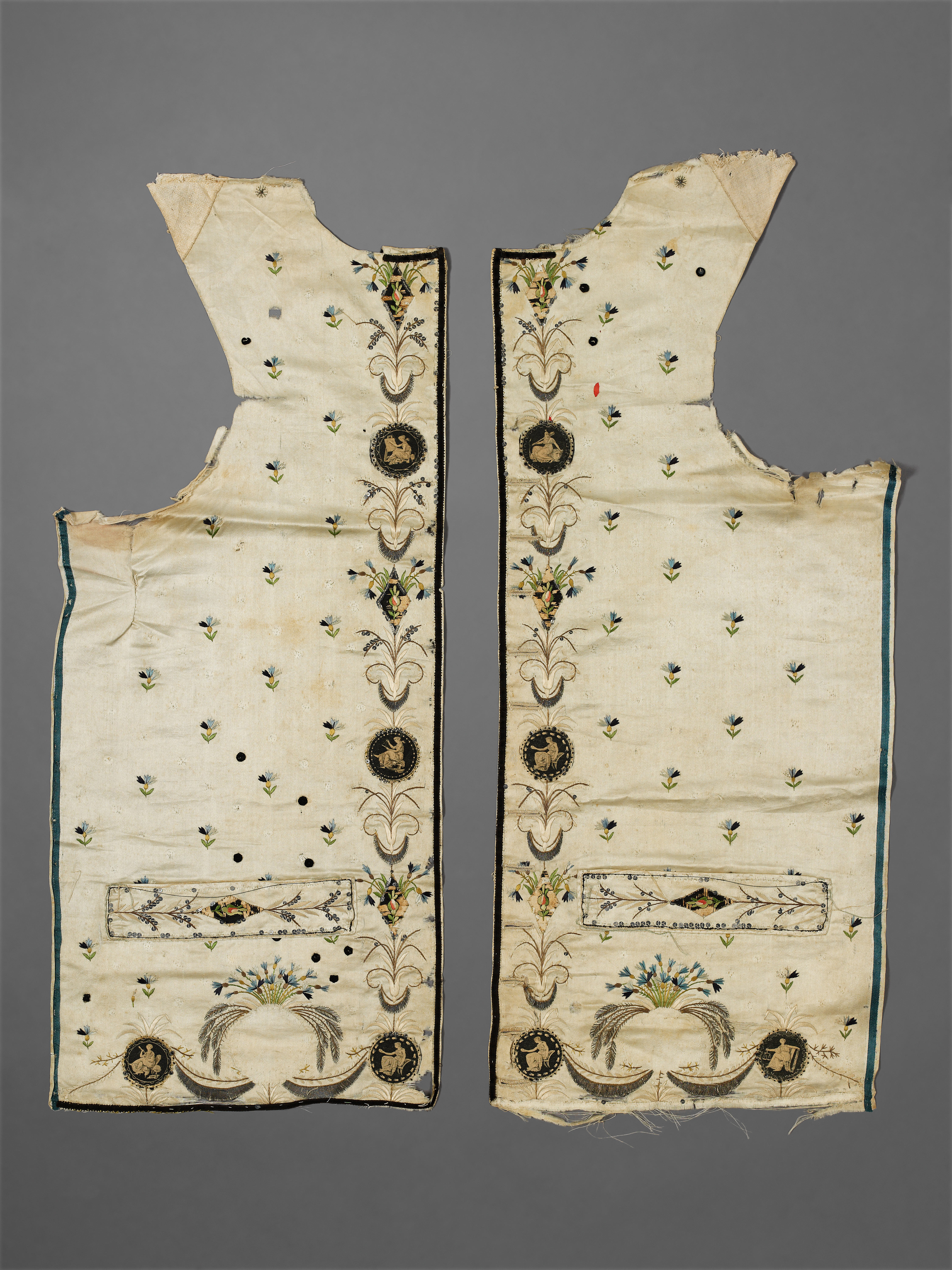
Urania, the Greek muse of astronomy, the hero Hercules and the Roman goddess Justitia can be identified by their attributes among the classical figures on the medallions appliquéd onto these waistcoat fronts. Neoclassical designs were highly popular in architecture, decorative arts and fashion in the late 18th Century, in the wake of archaeological excavations and scholarly publications. A waistcoat in the collection of the V&A features identical medallions of Hercules and Justitia, suggesting that such pre-made elements were available for purchase. Three of the unidentified figures on our example are identical to each other, confirming the impression. Circular stitch marks within unembroidered areas in the bottom border of our panels give the impression that larger medallions were once placed there as seen in another example in the V&A collection.
Like the waistcoats in the V&A collection, these panels are embroidered with borders around the edges and a scattered pattern across the upper body. In this case, the design is executed in silk and tarnished silver metal thread. The front borders incorporate another distinctive type of appliquéd motifs: embroidered pasteboard diamond shapes with floral sprigs on a black ground. Originally, this waistcoat would have sparkled with silver spangles, not only around the welt pockets where they are still obvious, but also on more than a hundred applied dots of black wool, alternating with the floral sprigs of the scattered pattern. Luckily, a few examples have survived and stitch marks indicate their original positions within the pattern. The straight hemline, front and lapels are a typical construction of fashionable waistcoats of this era. Over several decades, the style had slowly moved away from the softer shapes of menswear popular in mid 18th Century, with their curved front edges and cutaway skirts culminating in this almost ‘geometrical’ rectangular style.